


Queue Management Systems
A queue management system (QMS) is a technological solution designed to streamline customer flow, minimize wait times, and improve the overall service experience. It utilizes various tools and strategies to organize and manage customers as they interact with a business or service provider, whether in physical or virtual queues.
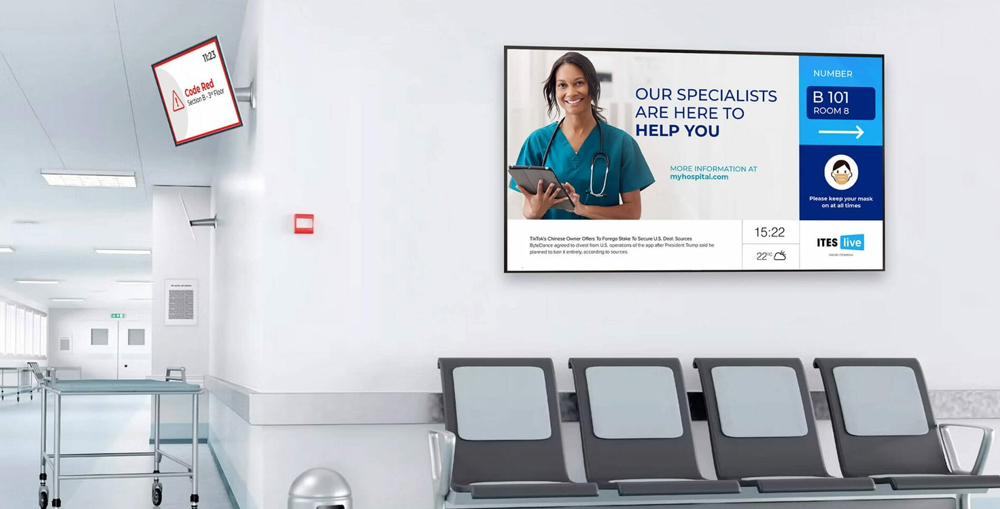
Solutions
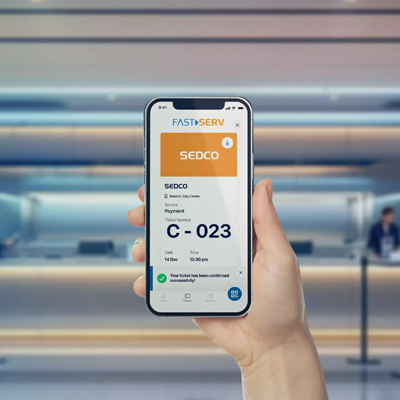
Virtual Queuing Systems
Allow customers to join a queue remotely via mobile devices.

Cloud-Based QMS
Accessible from anywhere with an internet connection, often offering scalability and flexibility.

Industry-Specific QMS
Tailored to the needs of specific industries like banking, healthcare, or retail.
Applications
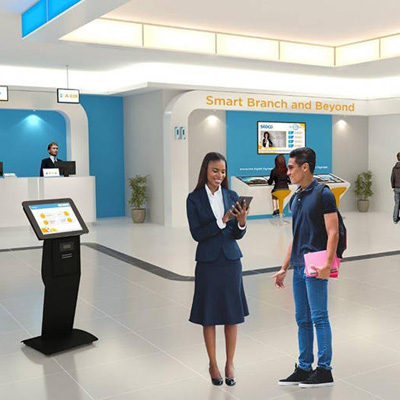
Banking
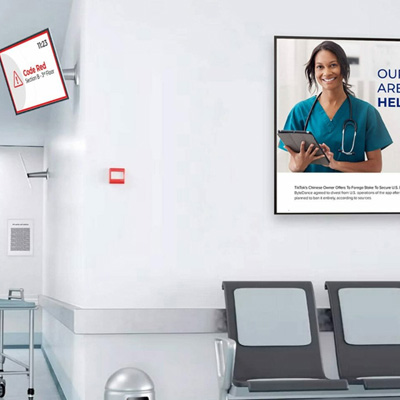
Healthcare

Government
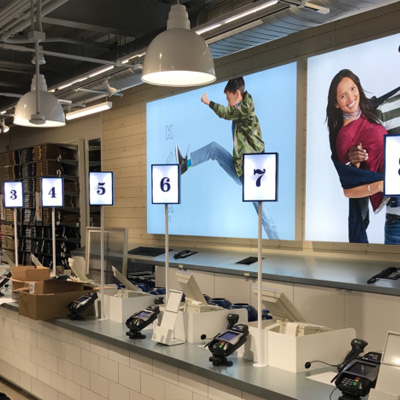
Retail

Other sectors
Frequently Asked Questions
A queue management system is a software or an automated solution designed to efficiently manage customer queues in various settings.
This system helps to optimise the process by utilising digital displays, kiosks, and other features to track the queue, provide estimated wait times, and notify customers their turn is approaching. The system helps reduce waiting times, enhances customer satisfaction, and allows businesses to allocate resources more effectively, ultimately improving operational efficiency and service quality.
- Structured queuing system: In this system, customers wait in a physically defined queue, and their order of service is determined by their position in the queue.
- Unstructured queuing system: In this system, customers are served in random order. Queues can be formed spontaneously in multiple directions, but it is also possible that queues are not formed at all.
- Virtual queuing system: In this system, customers do not physically wait in a queue, but rather use technology such as a mobile app or online platform to reserve a spot in line or schedule an appointment.
There are six key characteristics of queuing theory:
- Arrival process: This represents the rate at which customers arrive at a queue. It helps in understanding the frequency and pattern of customer arrivals, which can vary over time.
- Service process: The service process refers to the rate at which customers are served and the time it takes to serve each customer.
- Number of servers: The number of servers refers to the number of agents or resources available to service the queue. The number of servers can significantly impact the queue’s efficiency and waiting times.
- Queue discipline: Queue discipline refers to the order in which customers are served. Common disciplines include First-Come-First-Served (FCFS), Last-Come-First-Served (LCFS), and Priority Queue.
- Queue capacity: Queue capacity represents the maximum number of customers that can be in the queue at any given time.
- Calling population: This refers to the number of customers that can potentially come to the queue.
Here are some things to consider when choosing a queue management system that suits your business.
-
Choose the right type of queuing system/method
Depending on your business, there are some queuing systems that are more relevant than others. For details regarding the types of queuing systems, visit the ‘What are the examples of queue systems?’ FAQ page.
-
Choose a customisable and configurable solution
Each business has their own unique customer flow. Therefore, consider a QMS that can offer customisable and configurable options that can tailor your business with specific processes.
-
Real-Time Monitoring
This is an important feature to have in a QMS. The ability to monitor your business in real time will allow you to make informed business decisions.
-
Scalability
Look for a QMS that can adapt to the growing needs of your business. Choosing a QMS that provides no restrictions in their licence to the number of users can reduce the hassle of adding new users in a growing organisation.
-
Omnichannel Solutions
There are situations where both physical and/or digital services may be needed. Consider choosing omnichannel solutions that can tend to the needs and requirements of the situation in numerous ways.
-
Mobile Optimisation
Choose a QMS that is well-optimised for mobile devices, in other words: mobile compatible. This allows your customers to queue, check-in, and book appointments from anywhere at any time.
-
Intelligence Triage
Having a QMS with intelligence triage is very desirable. The ability to connect customers to the right employee and/or services is the key to handling higher demands efficiently.
-
System Integration
Consider choosing a QMS that can seamlessly integrate with other applications and systems that already exist in your business such as email logins and employee work applications. This will increase the effectiveness and efficiency of the business.
-
Security
The QMS solution must ensure that all customer data is secured and protected.
A queue management system is beneficial for businesses. It can help manage customer flow effectively, reduce wait times, and enhance the overall customer experience. With the help of a queue management system, businesses can ensure that each customer is served in a fair and orderly manner, promoting a positive customer experience. This system also enables businesses to allocate resources more effectively, ultimately improving operational efficiency and service quality.
- Structured queuing system: This type of queuing system is usually applied in grocery stores, banks, and airport security checkpoints where people need to stand in line physically in an orderly manner.
- Unstructured queuing system: This type of queuing system can usually be found in food courts, restaurants, and bus stops.
- Virtual queuing system: This type of queuing system can be implemented in various industries, but it is most beneficial for businesses that deal with a large number of customers/visitors daily with several touchpoints, such as healthcare facilities, government institutions, and colleges.
In a queue management system, the three operations of a queue are:
- Enqueue: This operation involves adding a new customer to the end of the queue.
- Dequeue: This operation involves removing the customer from the front of the queue and serving them.
- Peek: This operation allows the system to gather information about a customer (such as their status and priority) at the front of the queue without removing them.
The most common type of queuing system is the First-Come-First-Served (FCFS) queue, where customers or tasks are served in the order they arrive, with the first arrival being the first to be served. This system is often used in various real-world scenarios, such as waiting in line at a grocery store or processing tasks in a computer’s task scheduler. This system is simple and easy to implement, but it may lead to issues like long waiting times if there are a large number of customers.
Simple queuing models typically follow these four key assumptions:
- Customers arrive following a Poisson process, which means arrivals occur randomly and independently over time.
- Service times are exponentially distributed, indicating that the time it takes to serve each customer is also random and independent.
- The number of servers is fixed, and the servers work at a constant rate.
- The queue follows a First-Come-First-Served (FCFS) discipline, where customers are served in the order they arrive.
The four components of queuing systems are the arrival process, queue or waiting line, the service process, and the departure.
- The Arrival Process: how the customers or tasks will enter the system to be served. There are different types of arrival processes that will differ depending on the business. It is important to understand the arrival process because it is crucial for analysing and optimising the performance of the queuing system. This includes managing waiting times, resource allocation, and service capacity planning.
- Queue or Waiting Line: the line of customers or tasks that are waiting to be served. This is the most basic and fundamental component of a queue and that also describes the buildup for service when the facility or service is busy.
- Service Process: this refers to how the customers or tasks are going to be served by the system. The service process will differ depending on the business and the type of system. It is important to analyse and optimise the service process because it plays an important role in improving the overall performance of the queuing system. This includes reducing waiting times, increasing the system’s throughput, and increasing customer satisfaction.
- Departure: this refers to the process of how the customers or tasks will leave the system once they have been served. Once a customer or task has been completed, it will leave the system. In doing so, they will make new space for new customers or tasks in the queue. The departure process is one of the most important aspects of the queuing system because it directly affects the system’s performance metrics. This includes the average waiting time, customer satisfaction, and system utilisation.
Have questions? We can help
Our video security experts can help you implement the right security system for your business.